
Precision Machining Capabilities
We specialize in CNC machining of precision components for liquid cooling systems. Below are our core machining capabilities and technical standards.
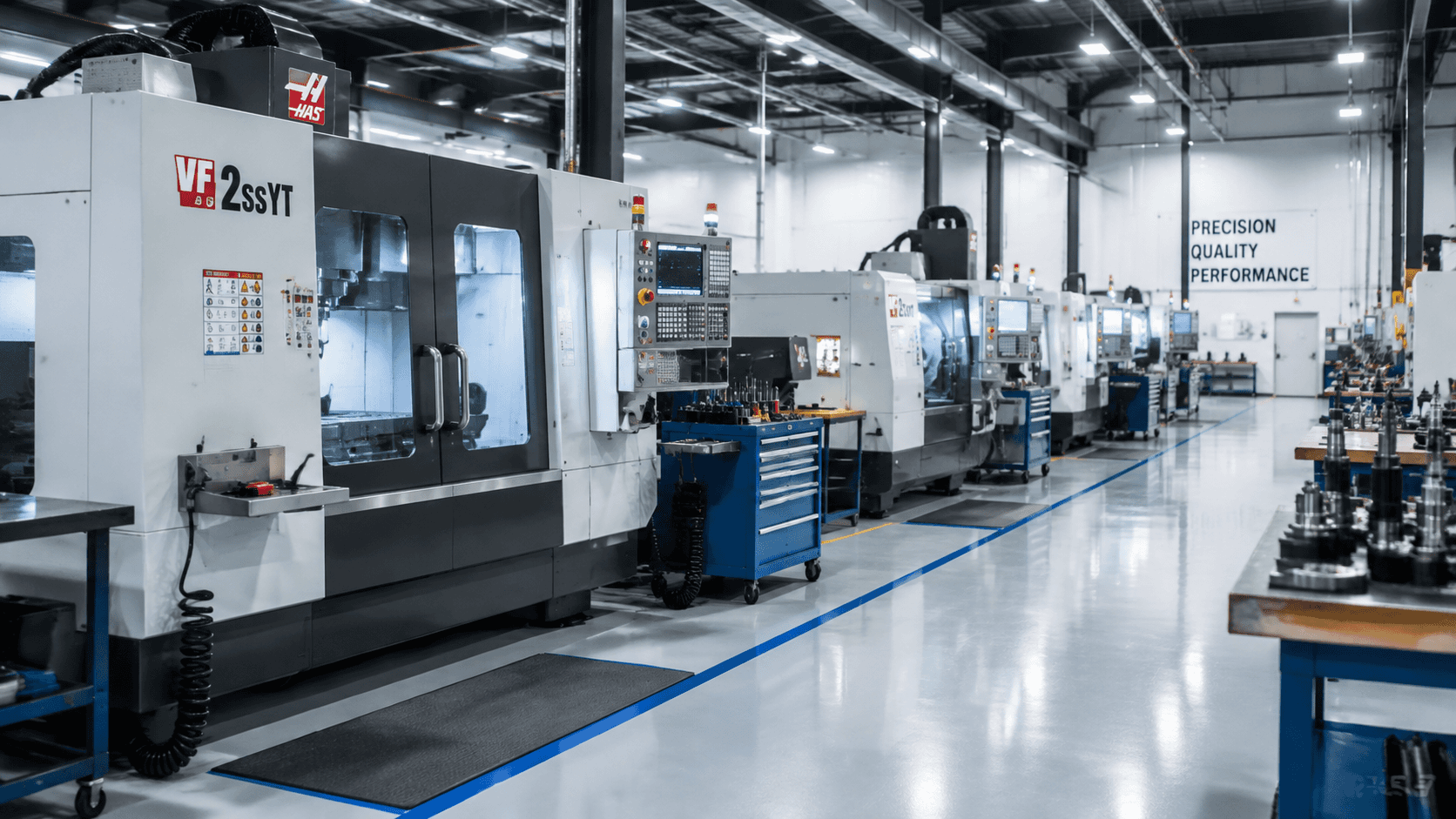
Advanced CNC machining workshop for precision liquid cooling components
Machining Processes
| Process | Description |
|---|---|
| Mill‑Turn CNC Machining | Combined turning and milling operations in a single setup for complex geometries |
| CNC Turning | High‑precision turning for cylindrical and threaded components |
| Swiss‑Type Lathe | High‑efficiency machining for small‑diameter, long, and complex parts |
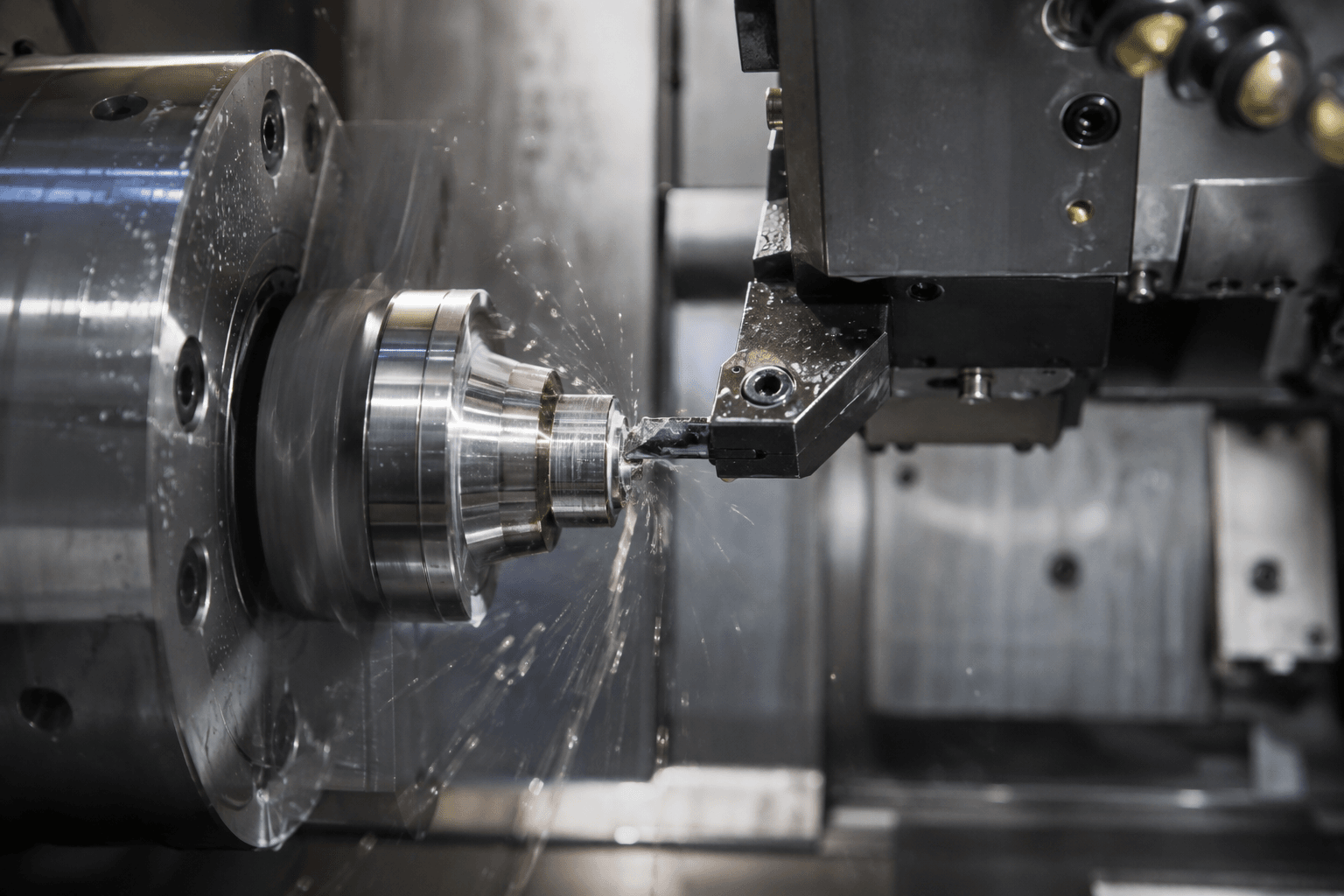
Mill-Turn CNC Center
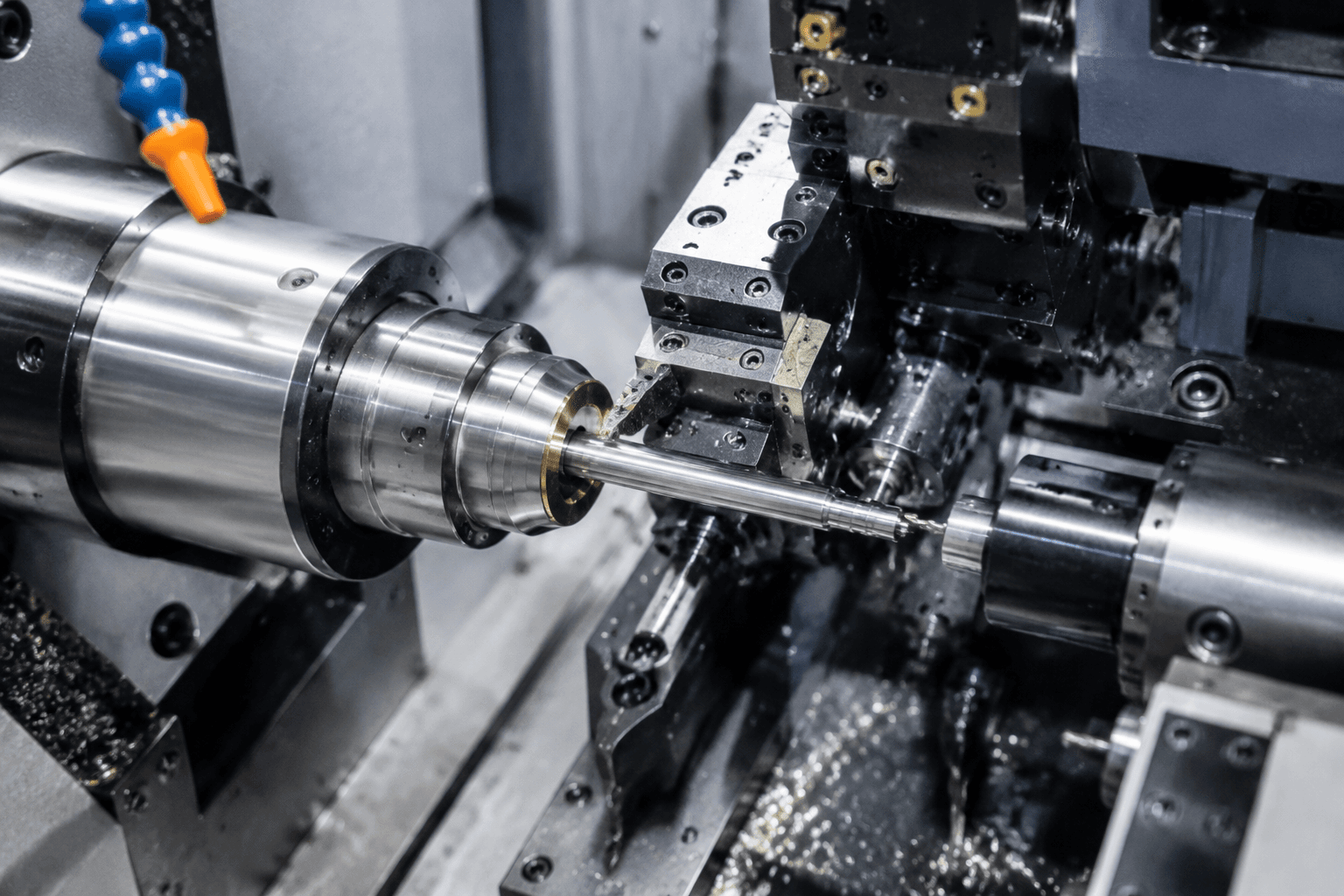
Swiss-Type Automatic Lathe
Our CNC machining equipment includes mill-turn centers, CNC lathes and Swiss-type automatic lathes. Depending on part design, these machines can perform turning, milling, drilling and tapping operations to manufacture complex components with controlled dimensions and positional accuracy. Combining multiple operations in a suitable setup can reduce repeated clamping and help maintain consistency across production batches.
Available Materials
| Material | Applications |
|---|---|
| SS304 / SS316L Stainless Steel | Corrosion‑resistant components for liquid cooling systems |
| Nickel‑Plated Brass | Threaded fittings and adapters requiring good machinability and corrosion resistance |
| 6061 Aluminum Alloy | Lightweight manifold bodies and structural components |
Material selection depends on the coolant medium, operating temperature, corrosion requirements and component design. We support stainless steel, aluminum alloy and nickel-plated brass options for suitable liquid cooling components. Material certificates can be provided according to project requirements.
Dimensional Tolerance Capabilities
| Dimension Range | Tolerance |
|---|---|
| 0 – 3mm | ±0.02 |
| 3 – 6mm | ±0.03 |
| 6 – 20mm | ±0.03 |
| 20 – 50mm | ±0.06 |
| > 50mm | ±0.07 |
| Angle (unless specified) | ±0.5° |
Tolerances depend on part geometry, material, dimensions and machining requirements. Tighter tolerances for critical interfaces can be reviewed against customer drawings and confirmed during technical evaluation.
Surface Quality
| Parameter | Specification |
|---|---|
| Standard Surface Roughness | Ra ≤ 1.6μm |
| Critical Bore Roughness | Ra ≤ 0.8μm (per drawing) |
| Surface Finish | Free of burrs, scratches, oil and water stains |
Machined parts undergo deburring and cleaning as specified to remove machining residues and loose particles from accessible surfaces, bores and flow channels. Additional cleanliness requirements can be reviewed according to the liquid cooling application and customer specifications.
Surface Finishing
| Material | Treatment |
|---|---|
| Stainless Steel (SS304/SS316L) | Electropolishing + Passivation |
| Aluminum Alloy (6061) | Anodizing (clear or dyed) |
- Electropolishing: Improves surface finish, reduces micro‑roughness, and enhances corrosion resistance
- Passivation: Forms a dense oxide film on stainless steel surfaces for improved corrosion resistance
- Anodizing: Creates an oxide layer on aluminum surfaces for enhanced wear and corrosion resistance
Material Control
| Parameter | Specification |
|---|---|
| Sulfur Content (Stainless Steel) | < 0.03% |
| Hardness (SS304) | HV270 min |
| Salt Spray Resistance | Neutral Salt Spray 96 hrs, no corrosion |
Strict material control ensures reliability and corrosion resistance of components throughout long‑term operation in liquid cooling systems.
Marking & Packaging
| Item | Method |
|---|---|
| Marking | Laser Marking (Part No. / Logo / Spec ID) |
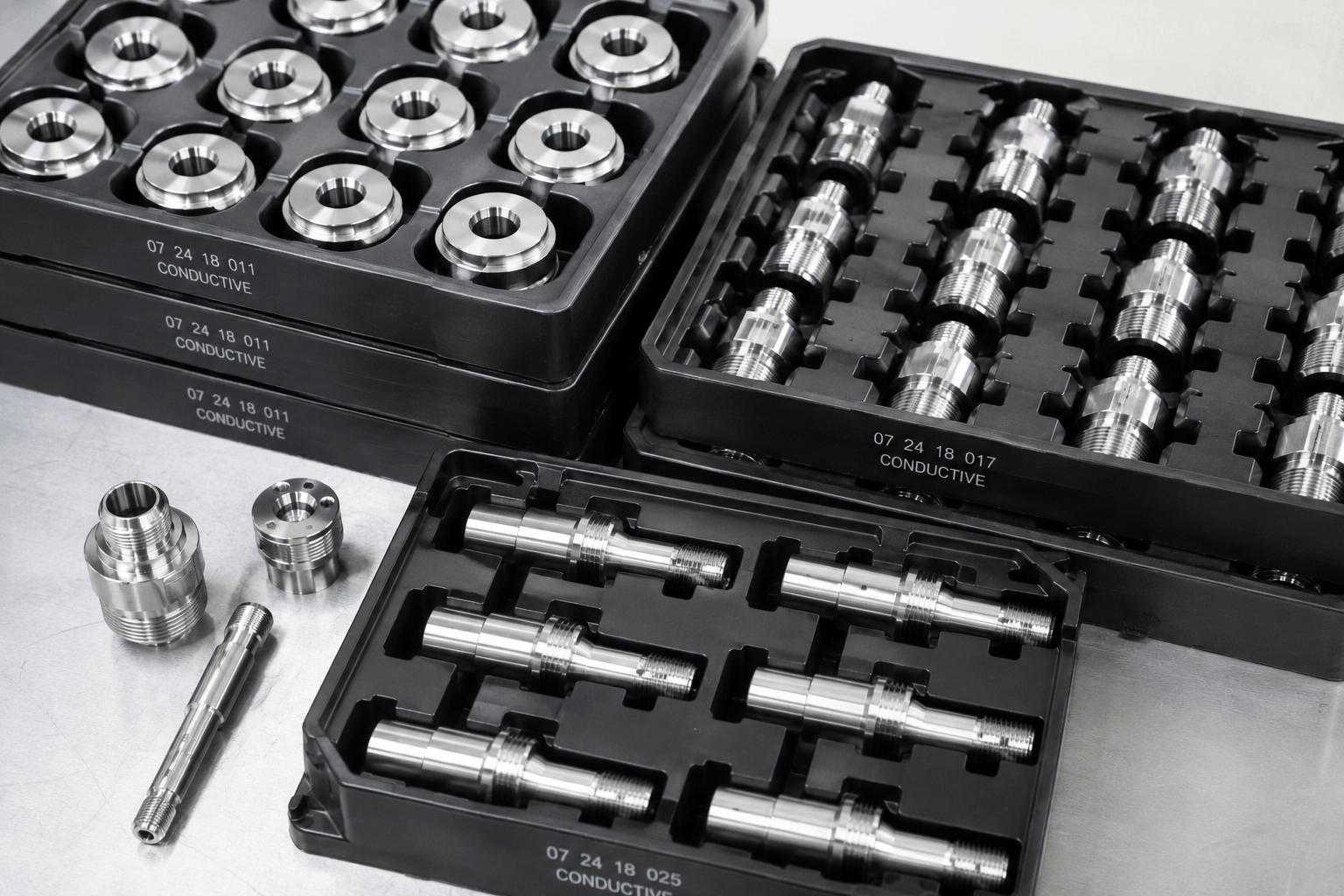
| Packaging | Tray Packaging (Anti‑static bag + foam padding + export carton) |
Finished parts in anti-static tray packaging
Quality Control
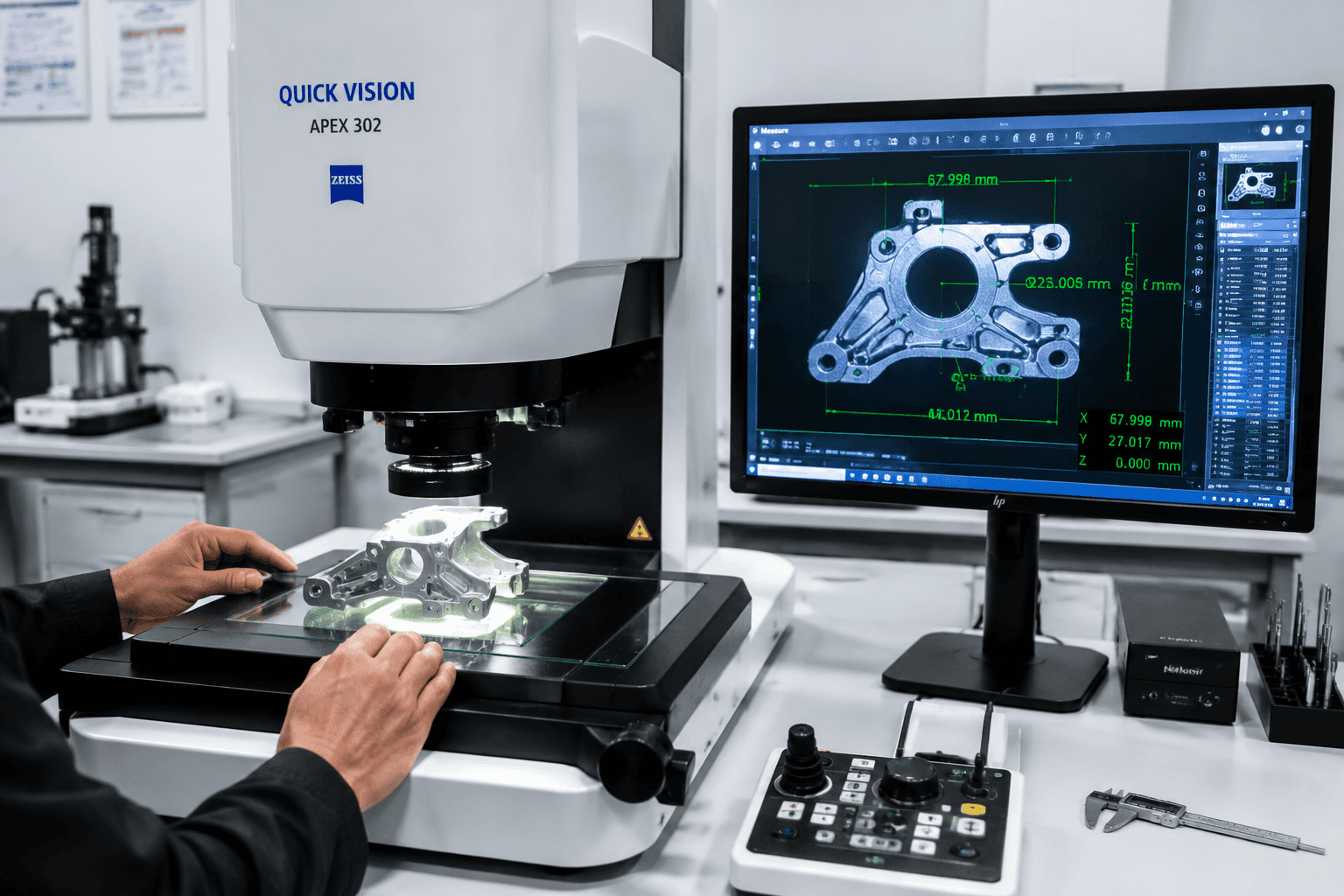
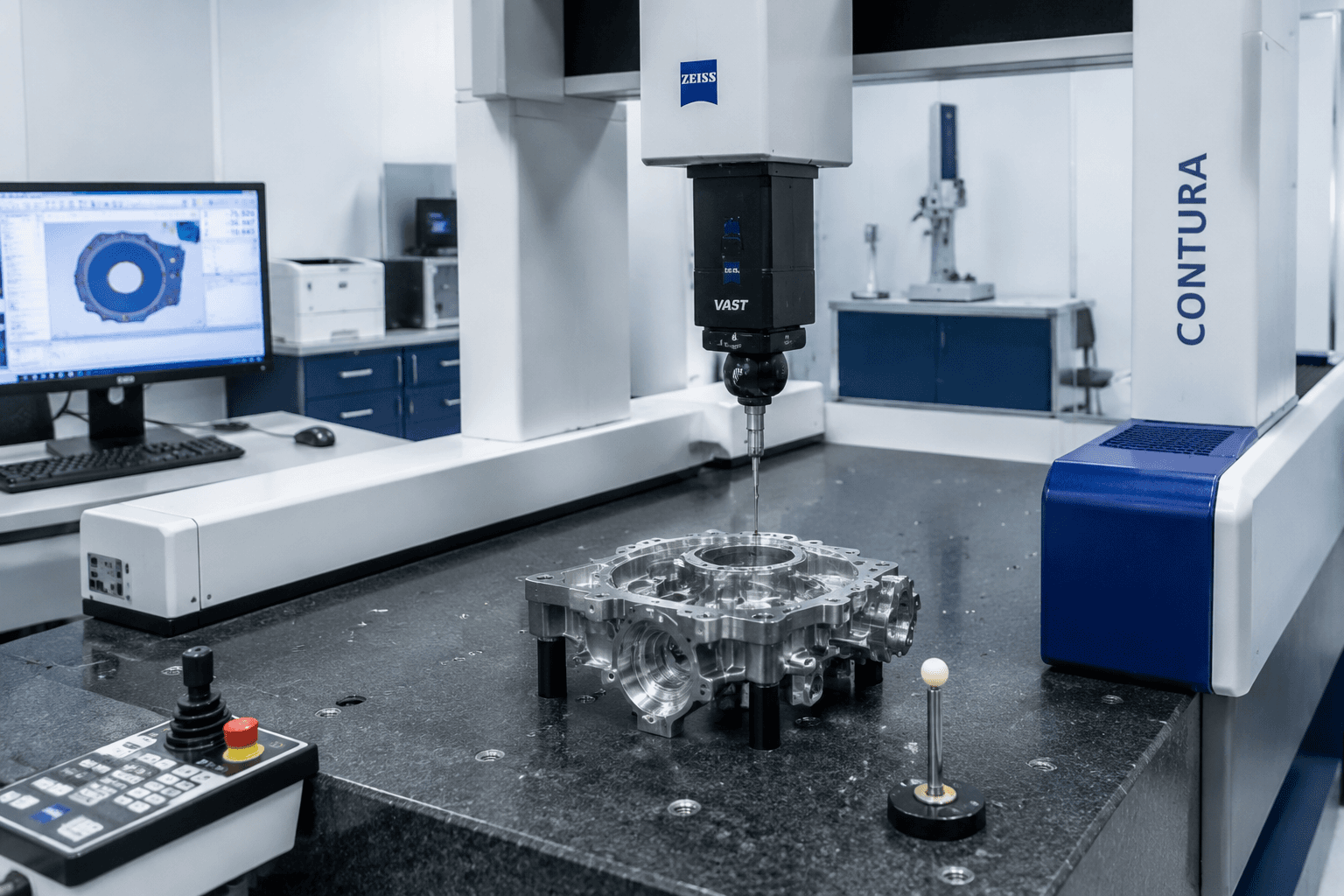
CMM Coordinate Measuring Machine
Vision Inspection System
| Inspection Stage | Details |
|---|---|
| FAI (First Article Inspection) | Full dimensional inspection of first article to verify process parameters and drawing compliance |
| IPQC (In‑Process Quality Control) | SPC monitoring of critical dimensions during production, CPK ≥ 1.33 |
| OQC (Outgoing Quality Control) | Final inspection (100% or sampling), with inspection report included in shipment |
Process Capability
Process capability studies can be applied to designated critical dimensions where required. CPK results and supporting records are available according to the agreed inspection plan and project requirements.
Compliance
- RoHS 2.0: Materials and processes comply with hazardous substance restriction requirements
- REACH: Compliant with chemical registration, evaluation, authorization, and restriction regulations